Bad Day to Be a Hotdog Retro Embroidery Review
A First Look at the Design Personality
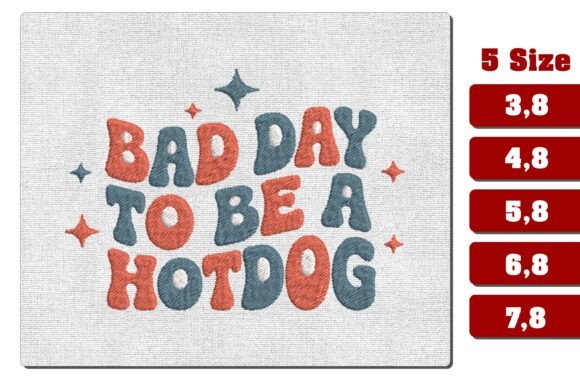
When I first loaded Bad Day to Be a Hotdog Retro Embroidery into my digitizing software, the visual energy was immediate. This isn't just another generic food-themed graphic; it carries a distinct retro vibe that feels perfectly timed for the current craft market. The typography has that slightly distressed, vintage aesthetic that pairs beautifully with the whimsical hotdog illustration. As an experienced designer who evaluates hundreds of files monthly, I appreciate when a design like this establishes a clear mood without needing excessive explanation. It screams "fun summer party" and "nostalgic 70s kitchen," making it an instant favorite for anyone looking to inject personality into their Independence Day collections or general summer merchandise.
The layout is balanced, avoiding the common pitfall of top-heavy text that often causes registration issues on curved surfaces. The hotdog itself appears to have enough definition in its shape to hold up well under magnification, which is crucial for close-up viewing on small items like caps or patches. However, before committing to a client order or stocking inventory, I always take a moment to analyze how the stitch construction will translate from screen to fabric. Does the retro font rely too heavily on thin lines? Is the fill stitch density appropriate for a quick run? These are the questions that separate a hobbyist from a professional seller.
Real-World Application: The Custom Tote Bag Test
To truly understand the potential of Bad Day to Be a Hotdog Retro Embroidery, I visualized a specific project scenario: creating a line of custom canvas tote bags for a local boutique's Fourth of July sale. Imagine a sturdy, natural-colored cotton tote. Placing this design in the center creates an instant focal point. The red and yellow thread colors inherent to the hotdog theme would pop against the neutral background, drawing the eye immediately. For an Etsy seller or small shop owner, this kind of high-contrast appeal is vital for product photography and printable mockups.
In this context, the design functions as more than just decoration; it becomes a conversation starter. A customer picking up a tote bag with this machine embroidery design is likely to smile at the pun and the style. It elevates a simple utility item into a statement piece. If you were to adapt this for sweatshirt embroidery, perhaps on a heavyweight heather grey crewneck, the retro feel would shift slightly toward streetwear, appealing to a younger demographic looking for unique festival gear. The versatility here is a major selling point. Whether it's a tote bag design for farmers' markets or a limited-run batch of custom apparel for a corporate picnic, the imagery holds its ground across different product categories.
Stitching Performance and Fabric Considerations
While the visual appeal is strong, practical application requires a critical eye on technical execution. When working with Bad Day to Be a Hotdog Retro Embroidery, you must consider the fabric texture. On smooth cottons and linens, the fill stitch areas should lay flat and even. However, if you attempt this on textured fabrics like denim or heavy twill, the intricate details of the retro font might get lost in the weave. Always test the design on scrap fabric first to ensure the stitch density isn't too aggressive for your chosen material.
For stretchy fabrics, such as jersey knit used in t-shirts, this design demands careful stabilizer selection. Without a proper cutaway or tear-away stabilizer, the tension required for the dense lettering could cause puckering, ruining the professional look of your finished product. The curved surface of a baseball cap presents another challenge. While the design is versatile, the width of the phrase "Bad Day to Be a Hotdog" needs to be checked against your cap hoop size. If the text wraps too tightly around the curve, the running stitch outlines may distort. In these cases, resizing the file to fit the panel comfortably is essential.
Navigating Limitations and Potential Pitfalls
No design is perfect for every situation, and Bad Day to Be a Hotdog Retro Embroidery is no exception. One area requiring caution is dark fabric backgrounds. The original color palette relies on bright, warm tones. If you embroider this directly onto black or navy fabric without adjusting the thread colors or adding a backing layer, the contrast might not be sufficient, leading to a muddy appearance. Additionally, tiny details in the retro font could become indistinguishable if the design is scaled down too much for a baby onesie or a small patch.
Another consideration is the frequency of washing. Items like aprons or kitchen towels endure harsh conditions. Ensure that the satine stitch borders are secure and that there are no loose threads that could snag during laundering. For commercial embroidery projects where durability is paramount, reviewing the stitch count and ensuring the design doesn't have overly dense areas that pull on the fabric is a necessary step. If you plan to sell these as personalized gifts, remember that customers expect perfection. A single skipped stitch or a pulled thread can diminish the perceived value of your handmade business.
Strategic Advice for Craft Entrepreneurs
If you are an Etsy seller or running a small craft business, integrating Bad Day to Be a Hotdog Retro Embroidery into your portfolio can be a smart move, provided you follow best practices. Start by creating a digital mockup to see how the design looks on various products before cutting any fabric. Compare light and dark fabric backgrounds to determine which offers the best visual impact. Check the licensing terms carefully; while the description mentions using designs for finished gifts, confirm if you are allowed to sell the physical embroidered items commercially or if there are restrictions on the number of units.
Always verify the hoop size requirements against your machine capabilities. Since the file comes in multiple sizes, you have flexibility, but you must ensure your machine can handle the largest version without running out of space. Finally, don't forget to inspect the small details after stitching. Zoom in on the finished sample to check for thread breaks or misaligned colors. By taking these steps, you ensure that your use of this embroidery file results in a high-quality, professional-looking item that builds customer trust and encourages repeat business. Whether for a holiday gift or a staple in your boutique, this design has the potential to be a crowd-pleaser when executed with care.